

Pandora's Box is a revolutionary product, that allows a user to interrogate and analyze the internal "flash" memory of cell phones. The market is currently populated with products that produce a blind report from data obtained from a particular source. By "blind", we mean that the user has no concept, control or understanding how the result was obtained from the original date. The "plug and dump" methodology and system, although quick in producing reports, gives the examiner a role no more involved than a "button presser" on a production line.
Pandora's Box allows the examiner to look underneath the surface of data files obtained from mobile telephones. Built-in scripts and decoding routines allow the examiner to manually probe data and qualify and quantify findings, and more importantly allow them to be happy that the tool is correctly reporting their evidence.
Pandora's Box is not designed to be a replacement to other software products and tools, it was designed to accompany them. Use Pandora's Box to examiner and parse data from the other tools. The scope is limitless.
Our latest build of the software includes SMS cache and Bluetooth device history, with MAC address support.
Until relatively recently, the only way to forensically examine cell phones was to utilize classic "forensic" tools which in turn would request information from handsets and produce the results in a report.
Although this is an effective means of interrogating handsets, it means that a device has to be switched on and "live" during an examination.
We at IDFS have been working hard on an alternative method to this kind of examination, allowing an examiner to interrogate the memory of a handset without the risk of incoming data overwriting existing data.
In addition, we have developed methods where previously unavailable information can now be recovered. Information such as the identity of previously inserted SIM cards, chat, the T9 (user dictionary), deleted / previous call information and more recently Bluetooth pairing information / MAC addresses.
Our latest work includes the support for the very latest Series 30 handsets from Nokia; Pandora's Box is now able to recognize and process handsets with multiple phonebooks.
Click here to view more details
 The chapters within describe all aspects of level design; from the initial design phase, to gameplay for singleplayer and multiplayer levels, to visual aspects regarding lighting and architecture, and more. The overall purpose is to explain the theories behind level design. It covers why light color X or architectural feature Y would work better in situation Z rather than color A or architecture B. It describes why a level is fun and what the level design does to enhance it: the ‘do’s and don’ts’ of creating environments for games.
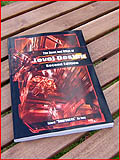 The book is divided into three major parts plus two smaller appendix chapters at the end. Those are: Design, Gameplay, and Audiovisuals, plus an Example and an Interview appendix chapter. All three major parts contain multiple extensive chapters. Starting with an introduction each covers each aspect in a chapter: Floorplans, Sounds, Texturing, Lighting and so on.
